
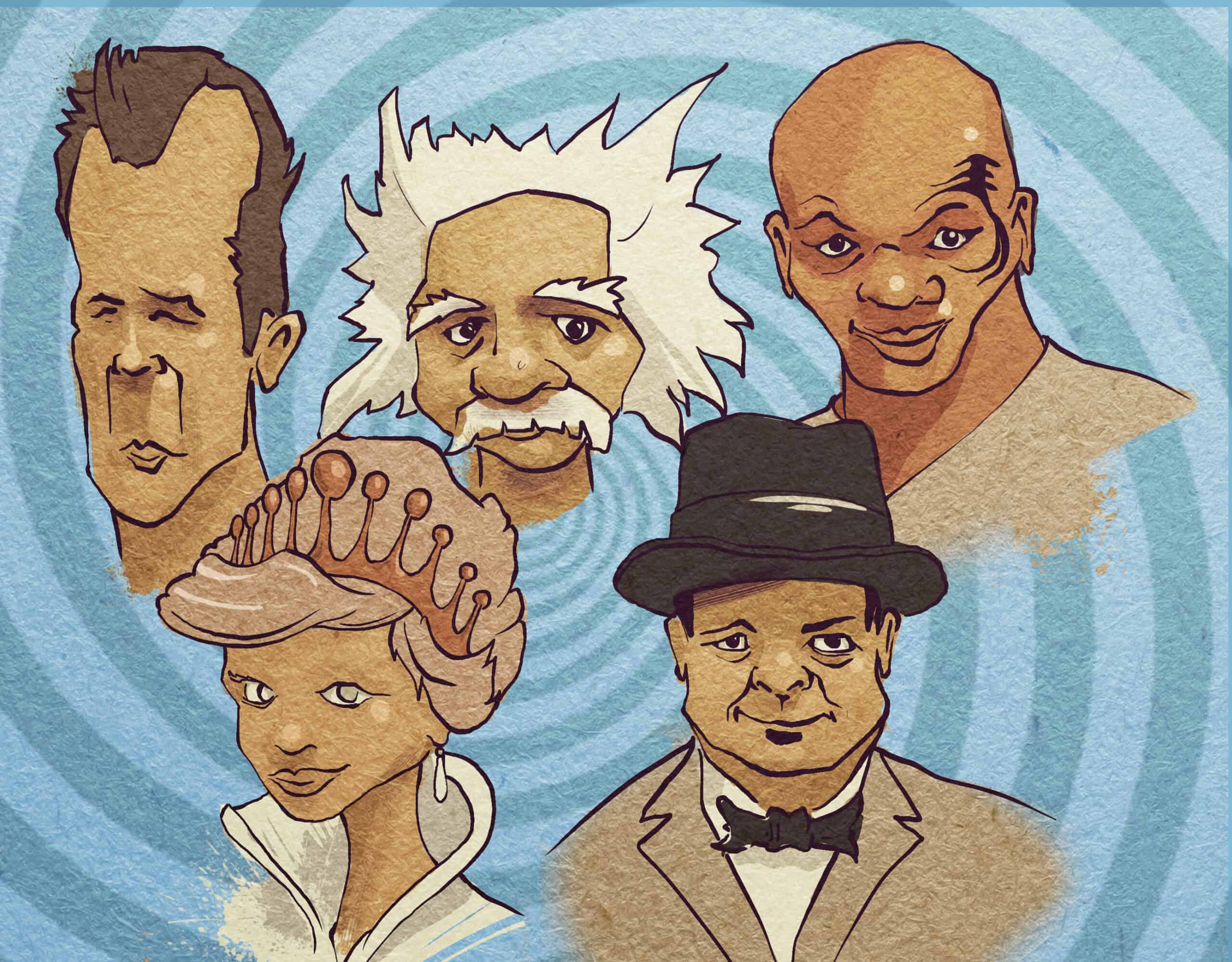
Many important historical figures and today’s cultural icons have used hypnosis to help them achieve success.
Start with what the word actually means, because most of the pictures people carry around came from the movies.
Hypnosis is an ultra focused state. Attention pulled in until almost nothing else is left, the room gone quiet, one thing filling the entire frame.
You have been there. The drive home you arrived at the end of without remembering any of it. The book that took a whole afternoon off you and gave no sign of having done it.
What the people below have in common is that they went there on purpose.
The Ones Who Built Things Inside Their Heads
Nikola Tesla described his own working method, and it is a startling thing to read. He would build a machine in his imagination, set it running, and leave it running for weeks. Then he would go back and look for wear on the parts. He trusted what he found in there enough to build the real thing from it.
Albert Einstein got at relativity much the same way. He imagined himself riding alongside a beam of light and then asked what he would see. No laboratory, no apparatus. A man holding a picture in his mind steadily enough to ask it questions.
Thomas Edison is said to have napped in a chair with a ball in each hand. As he drifted off his grip would loosen, the ball would hit the floor, the noise would wake him, and he would write down whatever had been drifting through his mind at that exact moment. He was not trying to rest. He was fishing in the drowsy borderland between waking and sleep, which is the same doorway a hypnotist opens.
The Concerto That Exists Because Of A Doctor In Moscow
In 1897 the premiere of Rachmaninoff’s First Symphony went so badly that one reviewer compared it to the work of a conservatory in hell. He was twenty-four years old. He stopped composing, and he stayed stopped for three years.
In January 1900 his family brought him to Nikolai Dahl, a Moscow physician who had trained in Paris under Charcot and who happened to be a serious amateur violist, so the two of them had music in common before they had anything else. Dahl saw him daily, through that winter and into the spring.
Rachmaninoff described the sessions afterward. He would lie half asleep in an armchair in Dahl’s study while the same few sentences were repeated to him, day after day. You will begin to write your concerto. You will work with great facility. It will be excellent.
He began the Second Piano Concerto that autumn and finished it the following spring. It has been one of the most performed pieces of music in the world ever since. The dedication on the manuscript, in his own hand, reads: to Monsieur N. Dahl.
Where It Shows Up In Sport
Tiger Woods was thirteen when his father brought in Jay Brunza, a Navy clinical psychologist who had worked with athletes at the Naval Academy. Brunza hypnotized him and taught him self-hypnosis, so that he could drop into the state golfers call the zone when he wanted it rather than when it happened to arrive. Brunza carried his bag in junior and amateur tournaments too. That was the apprenticeship.
Jack Nicklaus called his own version going to the movies. Before a shot he would run a short film in his head: the flight of the ball, where it came down, how it behaved when it got there, and only then the swing that would produce all of it. He wrote that he never hit a shot without watching it first.
Mike Tyson was taken to a hypnotist by Cus D’Amato while he was still a teenager and kept going for the rest of his career, before sparring and before every fight. In his own words, he always had hypnosis before he fought.
Mary Lou Retton rehearsed her routines in her head before she performed them. Rod Carew, who retired with one of the finest batting eyes the game has produced, worked with a hypnotist named Harvey Misel.
And The Entirely Ordinary Uses
Matt Damon went to a hypnotist in 2004, after twenty years of smoking, and has called it one of the best decisions he ever made.
Ben Affleck described what the room was actually like, and it is the least mysterious description imaginable. You sit in a recliner. A man sips water and talks to you for an hour about what nicotine is.
Ewan McGregor and Charlize Theron each went to a hypnotist about cigarettes. Daryl Hannah used hypnosis for stage fright during a London stage run. Lily Allen said that after hers, she wanted to go to the gym every day.
Catherine, Princess of Wales, has spoken publicly about using hypnobirthing, and credited the deep breathing and the narrow focus it taught her with carrying her through labor.
The Thing They All Had In Common
Not one of these people was doing anything exotic. They were doing something you have done by accident a hundred times, with one difference. They could do it when they chose to, pointed at something they had picked out in advance.
Rachmaninoff had to be walked to a doctor by his own family before anybody showed him how. Tiger Woods was thirteen and had the good sense to let somebody teach him.
Perhaps hypnosis is the extra edge you need to discover your talents and attract the success you are after.
Every person on this page started out with the same ordinary attention you have been using all day. They learned to aim it.
District Hypnosis works with everyday habits, motivation and personal goals in Washington DC. 202-853-8400.
District Hypnosis provides hypnosis for everyday stress, habits, motivation and personal goals, and does not diagnose, treat, cure or manage any medical or psychological condition. Hypnosis as offered here is not medical care, is not psychological care, and is not a substitute for either. The accounts on this page describe other people in their own words and in the public record, and describe nothing about what any client here has experienced. Work involving a diagnosed or suspected medical or psychological condition requires a written referral from a licensed provider. Individual results vary. Nothing on this site is medical or psychological advice.