
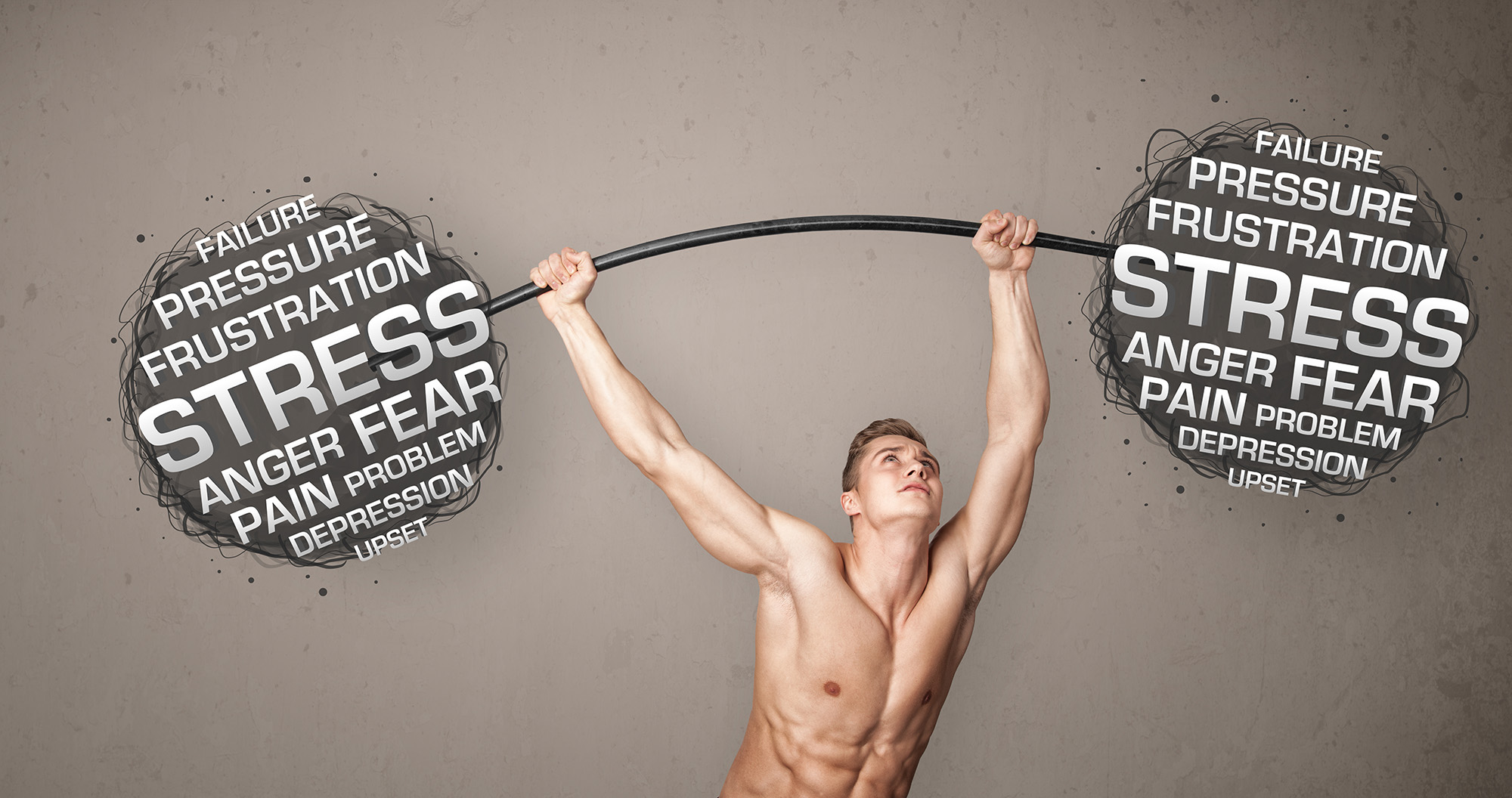
What Type of Stress Do You Have?
Most people carrying a lot of it have no idea. It arrived too slowly to notice.
Stress is strange in one specific way. The people with the most of it are usually the last to know.
It does not arrive. It accumulates. A little more intensity, a little more often, over a couple of years, and your sense of normal moves to accommodate it. Like the frog in the warming pot, you do not notice the temperature because you have been in the water the whole time. Nobody wakes up and thinks, I have been running at eighty percent since the spring.
You find out sideways. You snap at somebody who did not deserve it. You cannot get to sleep, or you get to sleep fine and wake at four. Something small goes wrong and your reaction is wildly out of proportion and you hear yourself and think, where did that come from.
That is usually the moment people start reading articles like this one.
First, the Thing Nobody Tells You
What wrecks one person restores another, and this is not a small detail. It is most of why generic advice fails.
Send an outgoing person to a loud room full of new people and they come home lit up. Send a quieter one to the same room and they come home flattened, and will need most of Sunday back. Give that quieter person a long empty afternoon and their nervous system unclenches. Give the same afternoon to the outgoing one and by three o’clock they are pacing the kitchen looking for someone to talk to.
So before anything else, it is worth knowing which of your habits actually cost you and which ones actually pay you back. Most people have never separated the two, and a surprising number are religiously doing the thing that drains them because somebody told them it was restful.
And Second, a Distinction Worth Having
Not everything that feels like too much is a clinical condition, and the overwhelming majority of it is not.
The stress most people are carrying has a name and a date attached. A career change. A house purchase. A presentation in three weeks. A bad season at work, a conflict that has gone on too long, a decision somebody else is taking their time over. Your nervous system is responding to something identifiable, and when the situation resolves, the response tends to go with it.
That is situational stress. It is ordinary, it is what most people mean when they say they are stressed, and it is what the rest of this is about. So here are the three versions of it that walk in the door most often. See whether one of them sounds like your week.
The Three You Are Most Likely to Recognize
One: the worry with a name on it
There is one thing, and everything else is fine.
A decision you are waiting on. A conflict at work that has curdled. A conversation you have been putting off for six weeks, which is now considerably larger than the conversation would have been. The move, the deadline, the scan result.
And it does not stay in office hours. You finish arguments in the shower. You rehearse the phone call on the drive. At four in the morning you are running a scenario that will not happen, in order to be ready for it, and you wake up tired having done a full day of work that did not exist.
The load itself is real. What makes it grinding is the overtime.
Two: the loop that will not close
Overthinking is not a disease. It is a protective habit that got overzealous.
The part of you that runs scenarios is trying to help. Its whole job is to make sure no outcome catches you unprepared, and it is very good at it. The trouble is that it does not have an off switch, so it keeps working at three in the morning, on a conversation from last Tuesday, for the eleventh time, having reached no new conclusion on the previous ten.
And the real cost is not the discomfort. It is the stall. Every option gets examined until all of them look flawed, nothing is chosen, and the decision rolls into next week. Again.
Three: the freeze
This is a well-practised skill short-circuiting at the exact moment you need it.
You know the material cold and it deserts you at the front of the room. Your hands will not make a putt you have made a thousand times on the practice green. The conversation with your boss goes perfectly right up until you are actually standing in the doorway. Interviews. Auditions. The first tee. A toast at a wedding.
What makes it maddening is that trying harder makes it worse. Effort and self-monitoring are conscious activities, and the skill that has seized up is not a conscious one. It lives in practice and repetition, which is what gets overridden the moment you start supervising yourself mid-swing.
Which is also why talking yourself into confidence on the drive over so rarely survives contact with the room.
What These Three Have in Common
All of them are running below the level of deliberate thought. That is why knowing better has not fixed any of them, and why the standard advice to simply stop worrying lands about as usefully as being told to stop hiccuping.
It is also why the relaxation everybody recommends is not the soft option it sounds like. A person running at full tension all day makes different decisions at nine at night than the same person makes rested. Deep relaxation is a learnable skill rather than a mood, and learning it deliberately changes more than people expect it to.
So Which One Is Yours?
It is worth actually answering, because the three are not interchangeable and they do not respond to the same thing.
The worry with a name on it eases when the situation resolves, so the work is getting through it without the overtime. The loop needs the rehearsing interrupted, because it will not exhaust itself. The freeze is not a nerves problem at all, it is a supervision problem, and it improves when you stop watching yourself work.
What all three have in common is that they live in the automatic part of the mind rather than the deliberate one, which is exactly why they have survived every sensible decision you have made about them.
That layer is reachable. It is just not reachable by arguing.
District Hypnosis works with everyday stress, habits, motivation and personal goals in Washington DC. 202-853-8400.
District Hypnosis provides hypnosis for everyday stress, habits, motivation and personal goals, and does not diagnose, treat, cure or manage any medical or psychological condition. Hypnosis as offered here is not medical care, is not psychological care, and is not a substitute for either, and nothing on this page is medical or psychological advice. Work involving a diagnosed or suspected medical or psychological condition requires a written referral from a licensed provider. Individual results vary.